

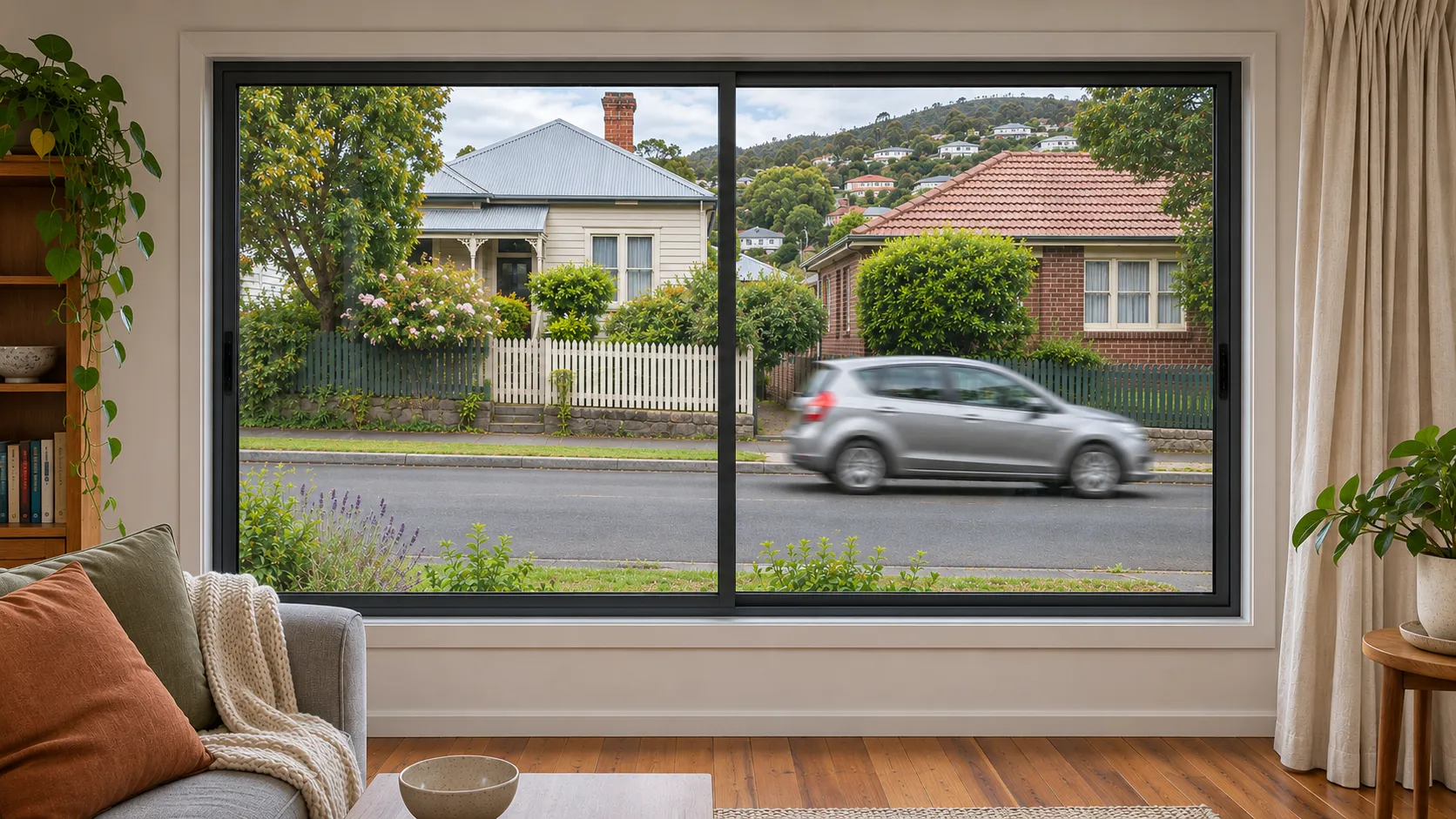
Replacement window glass can help reduce traffic noise, but only when it addresses a significant path through which sound enters your home. If engines, tyre noise or passing trucks remain noticeable with the windows closed, the glass may be part of the problem. Opening sections, worn seals and gaps around the frame can also contribute.
For homeowners in Hobart, identifying the source of the noise is an important first step before choosing replacement glazing. Ausflet Glass & Aluminium will assess existing window conditions and discuss suitable glass options. Understanding how acoustic ratings work, why different glass constructions perform differently and what to ask before approving replacement work can help you compare proposals without mistaking a possible improvement for a promise of silence.
You can give a glazing professional useful information by describing where and when traffic noise bothers you. However, listening from inside a room cannot reliably establish the window’s acoustic performance or identify every route sound takes.
An assessment must consider the window as a complete assembly rather than assuming the largest visible surface must be responsible. Several sound paths may contribute at once, particularly in older homes or properties exposed to regular traffic. YourHome’s guide explains how traffic noise enters a home, including through vents and the roof or ceiling.
Glass vibrates in response to sound outside and can transmit some of that sound indoors. At the same time, small gaps around an opening sash or at the frame perimeter can allow sound to pass through. A window that closes poorly may need a different solution from one with sound frames and well-fitting opening sections.

Useful observations include which rooms are affected, whether fixed and opening windows seem different and if you also notice draughts. Describe any rattling during passing traffic, difficulty closing a window or visible deterioration around its edges. These details help direct an inspection, but none proves that replacement glass is the right solution.
Do not dismantle frames, remove glazing beads or modify seals to investigate. A glazing professional can inspect the assembly and explain which defects matter. If you have double glazing and notice persistent misting between the panes, understanding the signs of a failed window glass seal will describe that separate issue. Misting alone does not establish how much traffic sounds the window transmits.
Traffic noise is not a single sound. A low engine rumble, the hiss of tyres on a wet road and a brief horn contain different mixtures of frequencies. A glazing change may reduce some parts of that mixture more effectively than others.
The Tasmanian Government’s guide explains what contributes to road traffic noise, including the mix of vehicles, their speed and the road surface.
Before an appointment, note the dominant sounds and their timing. You might hear steady tyre noise during the morning peak or occasional heavy vehicles in the evening. Wet-weather traffic can also create noticeable tyre noise. Identify where you sit or sleep when the disturbance is most noticeable.
A phone recording may help illustrate the character of the noise, but it is not a reliable measurement of window performance. Likewise, a room that sounds quieter than another may have different furnishings, dimensions or exposure to the road. Share those differences with the assessor so they can judge if the windows are comparable and if another part of the building needs attention.
Window sound reduction depends on how the glass, frame, seals and installation work together. A glass product with useful acoustic properties cannot deliver its full benefit if sound can readily pass through gaps besides it.
This is why choosing glass by thickness alone is an unreliable shortcut. The proposed construction needs to suit both the noise you want to reduce and the window that will hold it. Acoustic ratings also help when comparing products, provided the figures relate to the type of glazing being considered.
Changing glass thickness can alter the way a pane responds to sound. However, thicker glass is not automatically the best answer for every traffic noise problem. Performance varies across frequencies, so a change that helps with one part of the sound may be less effective with another.
Laminated glass consists of glass layers bonded with an interlayer. Acoustic laminated glass uses an interlayer designed to help dampen vibrations as sound travels through the pane. This can improve sound insulation across certain frequency ranges, although the result depends on the complete glass construction.
Multiple-pane configurations also need careful assessment. Double glazing uses two panes separated by a sealed cavity, and the pane thicknesses, space between them and overall construction influence sound transmission. Different pane thicknesses reduce weaknesses that may occur when identical panes respond similarly to certain sound frequencies.
Simply describing a window as double-glazed does not establish how well it will reduce the traffic noise affecting your room. The glass combination and supporting frame both matter.
When comparing products, ask about their acoustic performance ratings:
For example, a glazing product with a higher Rw rating may not necessarily perform as well against road traffic noise as another product with a more favourable Rw + Ctr result. Comparing both figures provides a more useful indication of suitability.
Ask whether the ratings apply to the glass alone or a tested window assembly. These figures are not interchangeable, and laboratory results do not guarantee identical performance in an installed window.
These are options for a professional to evaluate, not assumptions about what an existing frame can accommodate or what a supplier offers. Acoustic suitability must also sit alongside safety, durability and the practical requirements of the installation.
Even well-chosen glass may make a disappointing difference if the surrounding window is in poor condition. Worn opening seals, distorted sashes, loose components or gaps at the frame perimeter can limit the improvement. Sound may also reach the room through nearby building elements, bypassing the glass altogether.
Ask the assessor to distinguish between the condition of the pane and the condition of the assembly. Replacing glass does not automatically renew opening seals, correct frame movement or resolve a poorly fitting sash. Any associated work should be identified in the proposal.
This distinction also matters when reviewing acoustic performance information. A rating for glass alone is not necessarily a rating for the complete installed window. Ask whether the stated result applies to the proposed glass, a tested window assembly or a different configuration.
Where a proposal includes repairs as well as replacement glass, the quote should explain those items separately. This makes it easier to compare suppliers on the actual scope of work rather than choosing between prices that cover different treatments of the frame and seals.
Before approving replacement glass, check with a qualified glazing professional to assess suitability, frame condition and applicable safety requirements. For a road-facing bedroom or living room, the proposal should connect the recommended work to the sounds and conditions you have described.
When comparing glaziers in Hobart, ask each supplier to explain what they have assessed, which glass construction they recommend and what limitations remain. This gives you a clearer basis for evaluating different proposals.
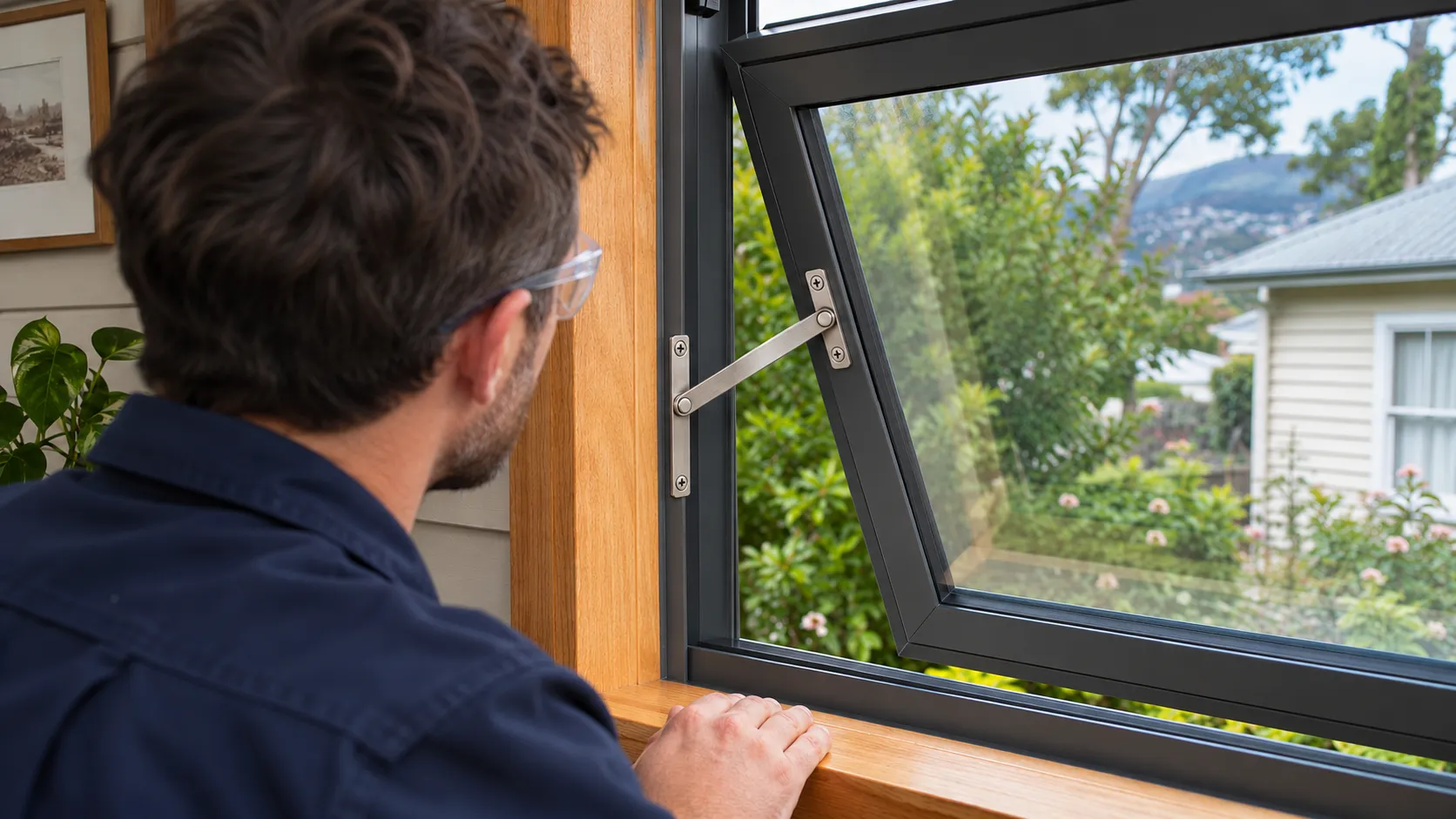
Start with a practical question: can the existing frame safely accommodate the proposed glass construction? Changes in thickness and weight can affect compatibility with the frame, glazing system and opening hardware. A pane is not suitable simply because its dimensions match the opening.
Ask if the recommendation retains the existing frame and what associated work is required. The assessment should consider frame condition, the way opening sections operate and whether the glass can be properly supported and secured. Leave glass removal and installation to experts rather than attempting to check these details yourself.
If the frame is deteriorated or unsuitable, ask for a clear explanation of why glass-only replacement is not recommended. You can also review what to check before replacing aluminium windows to prepare questions about the existing assembly.
A recommendation to replace more than the glass should be supported by the condition and compatibility findings, not just a general claim that newer windows are quieter.
Describe your goal in everyday terms. You may want passing vehicles to be less intrusive during conversation or traffic rumble to be less noticeable in a bedroom. That gives the professional a clearer brief than asking for a soundproof window.
Ask which components of the traffic noise the proposed change is expected to address and what evidence supports that expectation. If a numerical rating is supplied, request an explanation of what was tested and how closely it matches your proposed installation. A laboratory result should not be treated as a guarantee of the same experience in your room.
The written proposal should identify the glass construction, installation scope, frame or seal work and any limitations the assessor has identified. It should also state whether the expected improvement is a professional judgement or supported by testing relevant to the proposed assembly.
If a supplier promises complete silence without considering other sound paths, ask how that promise has been established.
Selecting replacement window glass is about finding a suitable balance between acoustic performance, existing window condition and installation requirements. Ausflet Glass & Aluminium evaluates existing glazing and discusses options that suit the property's needs. A clear understanding of the proposed glass construction, acoustic ratings and associated work makes it easier to choose an appropriate solution and set realistic expectations about reducing traffic noise.
Get in touch with our team of glass experts now at Ausflet Glass & Aluminium. Discover the difference that working with the professionals can make!
Call Us Now!