

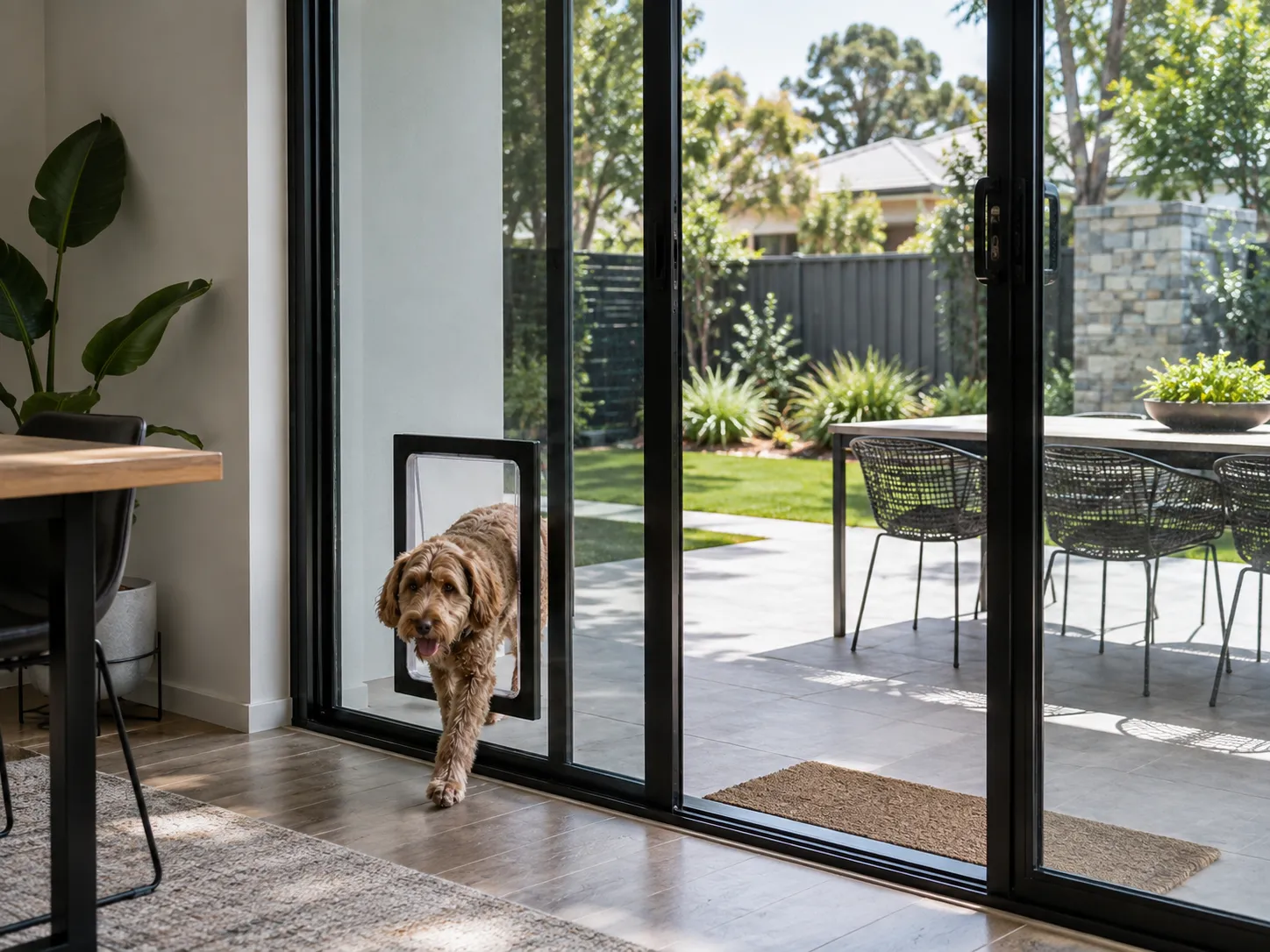
Adding a dog door to a glass door requires careful consideration of safety, security, energy efficiency and the type of glass already installed. Ausflet Glass & Aluminium understands that toughened and double-glazed panels require specialist attention, as many glass doors cannot be safely modified after manufacture. For homeowners considering glass repair in Hobart, professional advice can help determine the most suitable solution.
The type of glass, dog door size, placement and installation method can all affect the result. These factors need to be considered before the glass is ordered to avoid damage to the panel and ensure the finished door remains safe, secure and functional.
Understanding the available options can help homeowners choose a dog door that suits their existing glass door while maintaining the glazing's performance.
Many glass doors use safety glazing that cannot be cut or drilled after manufacture without compromising its safety characteristics. Rather than modifying the existing panel on site, a new piece of glass is manufactured with the required opening already incorporated.
Toughened glass is heat-treated after being cut and processed, meaning it cannot normally be cut or drilled afterwards. Attempting to create a dog door opening in finished toughened glass can cause the entire panel to shatter. The opening therefore needs to be made before the glass undergoes the toughening process.
Laminated glass consists of two glass sheets bonded with an interlayer. Its suitability for a dog door depends on the specific glass construction and proposed opening. Manufacturing a new laminated panel with the opening already incorporated provides a more practical and controlled solution than attempting to modify the installed glazing.
Glass used in doors and certain adjacent areas is subject to safety requirements under Australian glazing standards. The glass type, thickness, opening position and edge clearances all need to be appropriate for the location.
Replacing the panel allows the glazier to select suitable safety glazing and manufacture the opening in the correct position. The finished installation should meet applicable requirements, including AS 1288, where relevant.
A purpose-made glass panel allows the dog door opening to be positioned accurately for the door and pet door system. The glazier can also account for frame dimensions, sliding clearances and sealing requirements.
This helps prevent unnecessary stress on the glass while reducing the risk of draughts and water ingress. It also allows the pet door to operate smoothly without interfering with the main door.
Yes, dog doors can be incorporated into toughened and double-glazed glass, but the existing glazing needs to be replaced with a purpose-made panel or unit rather than cut after installation.
For toughened glass, the opening is made before the glass is toughened. This allows the finished panel to retain its intended safety characteristics.
Double-glazed units require additional consideration because the two panes and sealed cavity need to be manufactured as a complete unit. A dog door opening must be incorporated during manufacture so the sealed cavity and insulating properties can be maintained.
The exact glass specification will depend on the existing door, the location of the glazing and the requirements of the selected pet door. A glazier can assess these factors before the replacement unit is ordered.
Many glass doors can accommodate a dog door when a suitable replacement panel is manufactured. Suitability depends on the glass type, frame, available space, door configuration and location.
Here are some options:
Decorative, leadlight or bevelled glass may require a different approach, particularly where replacing the original panel would affect the appearance of the door. Small or high windows may also be impractical for pet access.
Because doors and low-level glazing are subject to safety requirements, professional assessment is recommended before selecting a dog door or ordering replacement glass.
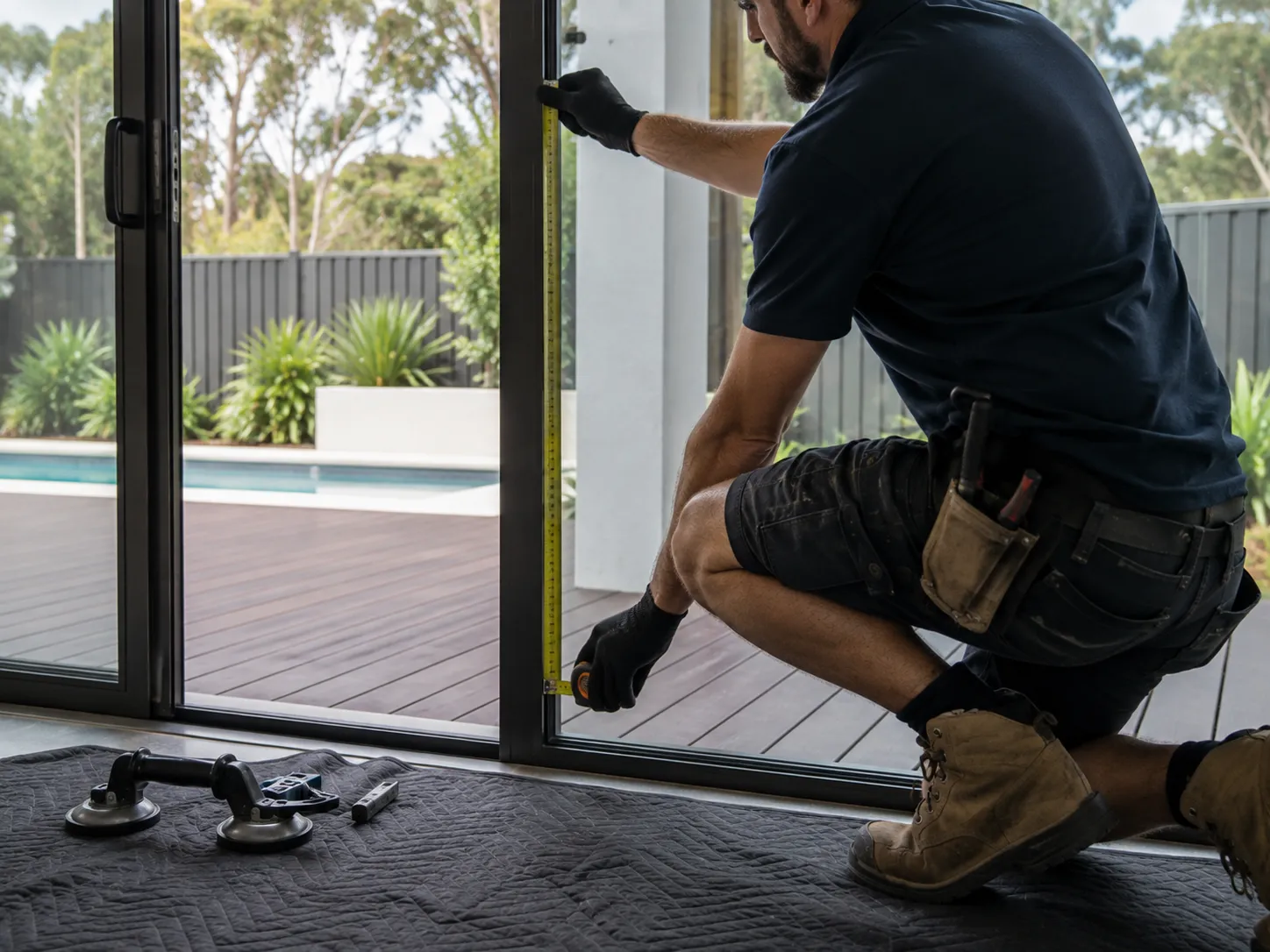
Installing a dog door in a glass door involves assessing the existing door, taking accurate measurements, manufacturing a replacement glass panel and installing the finished unit. The opening is prepared during glass manufacture rather than cut into the existing panel on site.
A glazier first checks the existing glass, frame and door operation to determine the most suitable solution. Measurements are taken of the glass opening, frame recess and available space for the dog door.
The pet door specifications should also be confirmed at this stage. The manufacturer's recommended opening dimensions can then be checked against the dog's height and body width to help ensure the finished opening is comfortable and practical.
Once the measurements and pet door specifications are confirmed, a replacement glass panel is manufactured to size. The dog door opening is created as part of the manufacturing process before the glass is toughened, where toughened glazing is specified.
The replacement glass is selected to suit the door and applicable safety requirements. Features such as tinting, coatings or double glazing can also be considered where appropriate.
The existing glass is removed and the new panel is installed into the frame. The dog door is then fitted into the pre-cut opening and sealed according to the pet door manufacturer's requirements.
The installer checks the main door's operation, seals, security and the pet door's flap and locking mechanism before completing the work.
This process helps ensure the dog door integrates with the existing door without unnecessarily affecting its safety, weather resistance or everyday operation.
The dog door should be selected around the pet's measurements and then positioned within the glass panel based on comfort, safety and the construction of the door. Correct sizing helps the dog pass through comfortably while reducing the risk of unnecessary draughts, security problems or stress on the glazing.
Consider the following when choosing the size and position:
Because the opening needs to be determined before a replacement glass panel is manufactured, measurements and positioning should be confirmed with a qualified glazier before the glass is ordered.
Before installing a dog door, the glass, frame, proposed opening and pet door should all be assessed. This is important for doors and low-level glazing, where safety glazing requirements may apply.
The existing glass should be identified as toughened, laminated, double-glazed or another type. The appropriate replacement specification will depend on the glass's location, construction and the proposed dog door.
The replacement glass should have an appropriate thickness and safety classification for its application and comply with relevant Australian glazing requirements.
The dog door opening needs adequate clearance from the glass edges, corners and frame. Its position should also provide enough room for the pet door to be securely fitted without placing unnecessary stress on the glass.
For sliding doors, the opening should not interfere with tracks, rollers or locks. A fixed panel is often preferred because it allows the sliding section to continue operating independently.
The frame, tracks, rollers and surrounding structure should be checked for existing damage or weaknesses before a replacement panel is ordered. The new glass must also be correctly packed, secured and sealed within the frame.
Once installed, the main door should continue to operate normally without the pet door affecting its movement or security.
The dog door should be appropriately sized and positioned so the pet can pass through without excessive crouching, jumping or rubbing against the frame. The flap should also close securely and provide suitable protection against draughts and weather.
Having the installation assessed by an experienced glazier helps ensure the replacement glass, pet door and installation method are compatible with the existing door.
A dog door creates an opening in a previously sealed door, so product selection and installation can affect security, draught protection and thermal performance. Choosing a suitable pet door and having it professionally fitted can help maintain the door's overall performance.
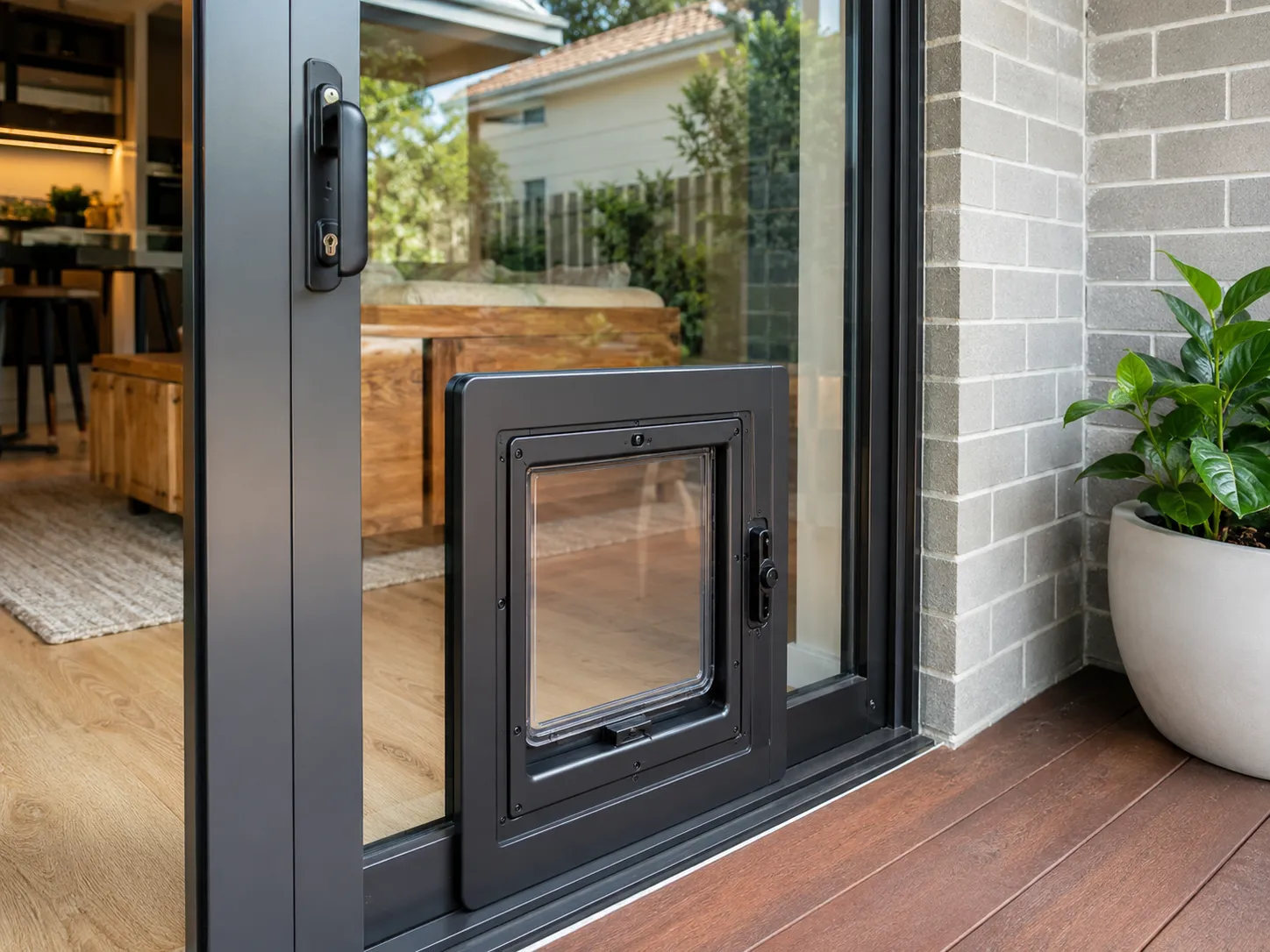
Consider the following:
With the right pet door, glass specification and installation method, convenient pet access can be provided without unnecessarily compromising the performance of the glass door.
A dog door does not always need to be installed in a glass panel. If the existing glazing is unsuitable, difficult to replace or particularly decorative, another access point may provide a simpler solution.
Suitable alternatives may include:
The best option depends on the home's layout, the dog's size and the existing doors and glazing. Professional assessment can help determine whether replacement glass or an alternative access point provides the safest and most practical solution.
The cost and timeframe for installing a dog door in glass depend on the glass specification, panel size, pet door, site conditions and installation complexity. Because many safety glass and double-glazed units cannot be modified on site, a purpose-made replacement panel will often be required.
The type, size and thickness of the glass can affect the cost. Double glazing, large or heavy panels and speciality glass can require more specialised manufacture, handling and installation.
Larger or more sophisticated dog doors may cost more because of their materials, security features, locking systems and construction. The position of the opening can also affect the complexity of manufacturing in narrow or decorative panels.
Straightforward access and easy removal of the existing panel can help keep installation time down. Difficult access, large or heavy glass and upper-level installations may require additional labour or equipment.
The replacement glass is generally manufactured off-site after measurements and specifications are confirmed. Lead times therefore depend on the glass type, availability, manufacturing requirements and any custom features.
A professional assessment can provide a clearer indication of the likely cost and timeframe before the work begins.
A professional glazier should be involved whenever a dog door is being incorporated into glass. Many safety glass and double-glazed panels cannot be safely modified after manufacture, while doors and low-level glazing may also need to meet specific safety requirements.
Professional advice is vital when:
Speaking with an experienced glazier before purchasing a pet door can help avoid compatibility issues and unnecessary costs. Professional measurement, custom glass manufacture and installation provide a safer way to add pet access while maintaining the door's appearance and performance.
Installing a dog door in a glass door is achievable with the right planning, materials and professional support. The glass type, panel configuration, pet door dimensions and installation method all need to work together to maintain safety, security and weather performance.
While DIY options may seem convenient, attempting to modify existing safety glazing can create risks and may affect the door's integrity. Ausflet Glass & Aluminium can help homeowners assess the existing glazing, select a suitable replacement panel and install a dog door solution that integrates cleanly with the existing door.
Get in touch with our team of glass experts now at Ausflet Glass & Aluminium. Discover the difference that working with the professionals can make!
Call Us Now!