


A shower door that used to open smoothly should not suddenly need a shove. If you have noticed a scraping sound, a catching corner or resistance just before the door closes, the important question is what is touching what. A flexible seal brushing the floor is a different problem from a glass edge striking a tile or neighbouring panel.
For your bathroom, recognising that distinction helps you explain the problem and avoid making it worse. Ausflet Glass & Aluminium can assess shower screen issues and determine whether the problem involves the seals, hinges, glass positioning or mounting points. Knowing what to observe, which warning signs mean you should stop using the door and what information to provide can make the assessment more straightforward. You do not need to adjust or dismantle anything to provide useful observations.
The first distinction is between flexible material dragging and a rigid part of the door making contact. The sound, location and timing of the resistance can offer clues, but none of these confirms the cause on its own.
Use what you have already noticed during normal use, along with anything visible while the door is stationary. Do not repeatedly open and close a catching door to reproduce the problem if you suspect the glass itself is touching something.
Many shower doors have a flexible strip along the bottom or closing edge to help contain water. Depending on the design, this strip may lightly brush an adjoining surface. A soft wiping sound that has always been present is different from the new resistance that makes the door difficult to move.
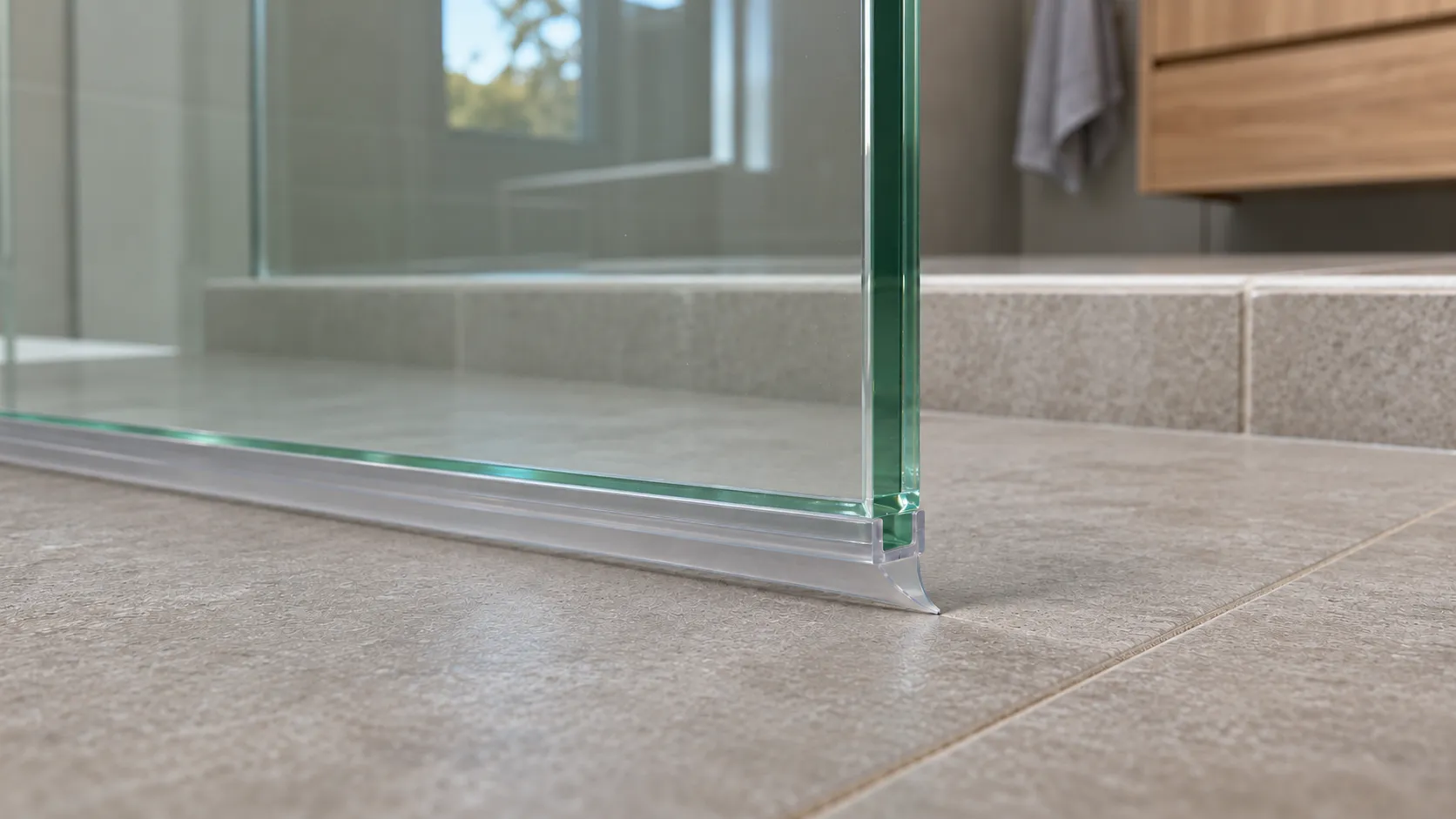
Shower door seals can become distorted, split or displaced. A section that hangs lower than the rest may fold underneath the door or drag across the shower base. You might already have noticed the strip bunching near one corner, leaving a wet trail or making a squeaking sound as the door moves.
These observations suggest a seal may be involved, but they do not rule out an alignment problem. If the door has dropped slightly, an otherwise serviceable seal may now be pressed harder against the floor. Trimming or removing it could hide the symptom without addressing the change in clearance. Leave that distinction to a professional rather than trying to modify the strip.
Hard contact deserves more caution. A sharp click, scraping at a glass corner or an abrupt stop can indicate that the door is touching a rigid surface. However, sound alone cannot reliably distinguish glass contact from hardware or frame contact.
From a safe position, you may see that the gap besides the door is uneven or that one corner sits unusually close to a tile. Report the location without putting your fingers into the gap or trying to lift the door clear. A small clearance problem can place concentrated pressure on a glass edge if the door is forced.
The screen configuration also matters. A framed door has different potential contact points from a frameless door besides a fixed glass panel. If you are unsure how to describe yours, the explanation of different shower screen configurations may help you identify the basic style. A photograph of the whole screen is usually more useful to an assessor than guessing which component has failed.
A catching door does not necessarily have one obvious broken part. Shower screen alignment depends on the relationship between the moving glass, its hardware, the surrounding panels and the surfaces supporting the assembly.
Because the working gaps can be small, a modest change in position may become noticeable during opening or closing. The location where you feel resistance is not always the underlying problem’s location.
Hinges support the door while controlling its movement. Wear, movement within the hardware or changes in how the glass is supported can alter the door's swing path. This can affect the clearance between the glass and surrounding surfaces, causing a lower corner or closing edge to approach the shower base, frame or adjoining panel more closely.
A useful distinction is whether the door has always caught or it previously worked smoothly. A long-standing problem and a sudden change give the assessor different starting points. Also mention whether the resistance developed gradually or appeared after a specific event, such as the door being knocked.
Do not try to compensate by lifting the handle as you open the door. That may temporarily change the contact point, but it does not establish why the clearance has changed. Hinge adjustments and work on glass clamps should be left to a glazing professional who can assess and support the door appropriately.
A displaced seal can create resistance even when the glass remains correctly positioned. The flexible material may curl, harden or pull away at one end, changing how it passes over the surrounding surface.
Recent seal work is relevant too. If the catching began immediately after a seal was replaced, tell the assessor. The profile, fit and position of the strip may need checking against the particular screen rather than assuming the hinges are responsible.
Likewise, water escaping near the door does not prove the seal alone is faulty. A change in the door's position can affect clearance and water containment. Describe the catching and any new leakage together so the assessment considers their possible relationship.
The door relies on more than its hinges. Depending on the design, its support may involve a frame, a fixed panel or hardware mounted to surrounding surfaces. Movement in those areas can affect the door's position even when the symptom appears at the opposite corner.
Visible separation around a mounting point, a frame that appears to have shifted or movement you have already noticed during ordinary use should all be reported. Do not push against the assembly to test its stability or tighten accessible screws yourself.
For an enquiry about shower screens in Hobart, give experts the contact location and any visible changes around the supports. This ensures the assessment considers the complete assembly rather than focusing only on the seal or the area where the door catches.
Stop using the door if there is suspected glass-to-hard-surface contact, visible glass damage or a noticeable loss of stability. Continuing to use it, even carefully, can place further stress on an already compromised part of the assembly.
A dragging seal without other warning signs may be less urgent, but new resistance still warrants professional assessment. Do not force the door through a tight spot while waiting for advice.
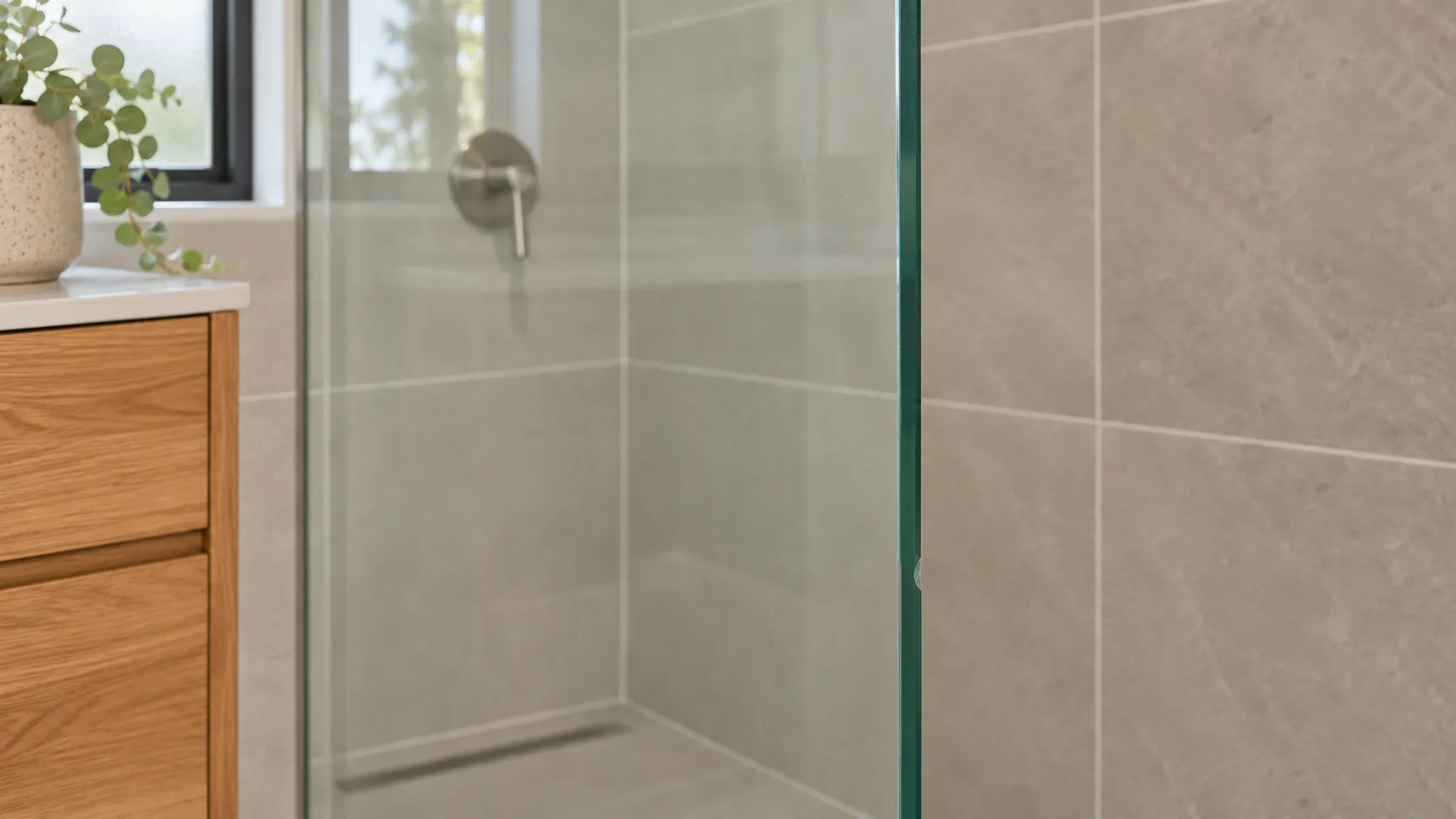
A door that strikes a tile, another glass panel or its frame should not be treated as something that simply needs a firmer push. Glass edges are vulnerable to damage, and the absence of a visible crack does not establish that continued contact is harmless. The NSW Government’s toughened glass safety guidance explains why an unframed shower door edge that rubs against a hard surface needs prompt attention.
Visible chips, cracks or fresh damage near an edge or hinge are reasons to stop using the screen, keep people away and seek professional advice. The same applies if the door appears loose, hangs differently or no longer stays supported in its usual position. Do not try to straighten it, remove it or hold it in place with improvised supports.
If the glass has broken, avoid handling fragments or walking through the affected area. Keep children and pets away and arrange assistance. The information on what to expect from a glass repair assessment will help you prepare for the conversation, but a catching shower door still needs an assessment of its glass, hardware and supports.
Start with a short description of what changed. For example, the lower corner now catches near the closing position, or the bottom strip has begun folding underneath. Be clear about whether you actually saw contact or only heard a noise. That distinction helps avoid treating an assumption as a confirmed fault.
Explain when the problem began, if it is getting worse and whether any work was recently carried out on the screen or adjoining bathroom surfaces. Mention any leakage, visible damage or movement noticed during ordinary use. You do not need to diagnose the hinge or identify the seal model.
If the door started catching soon after installation or repair, tell the business that supplied the screen or carried out the work what changed. The ACCC explains what to do if there’s a problem with a product or service you bought.
If photographs can be taken safely without moving the door, include a full view of the screen and a closer view of the suspected contact area. A picture of the hinges, frame or mounting points may also help the professional understand the configuration. Do not operate an unsafe door to record a video or place an object in the gap to demonstrate its size.
A shower door that suddenly catches or scrapes may have a problem with its seal, hinge alignment, glass clearance or mounting points. Identifying where the resistance occurs and noting any changes can narrow down the possible causes, but forcing the door or attempting adjustments can make the situation worse.
If your shower door is no longer moving as it should, Ausflet Glass & Aluminium will assess the screen and identify the proper repair or adjustment. Providing clear observations about the contact point, changes in movement and any visible damage helps the assessment focus on the underlying issue. Professional attention can restore safe, reliable operation while helping prevent further damage to the shower screen.
Get in touch with our team of glass experts now at Ausflet Glass & Aluminium. Discover the difference that working with the professionals can make!
Call Us Now!