

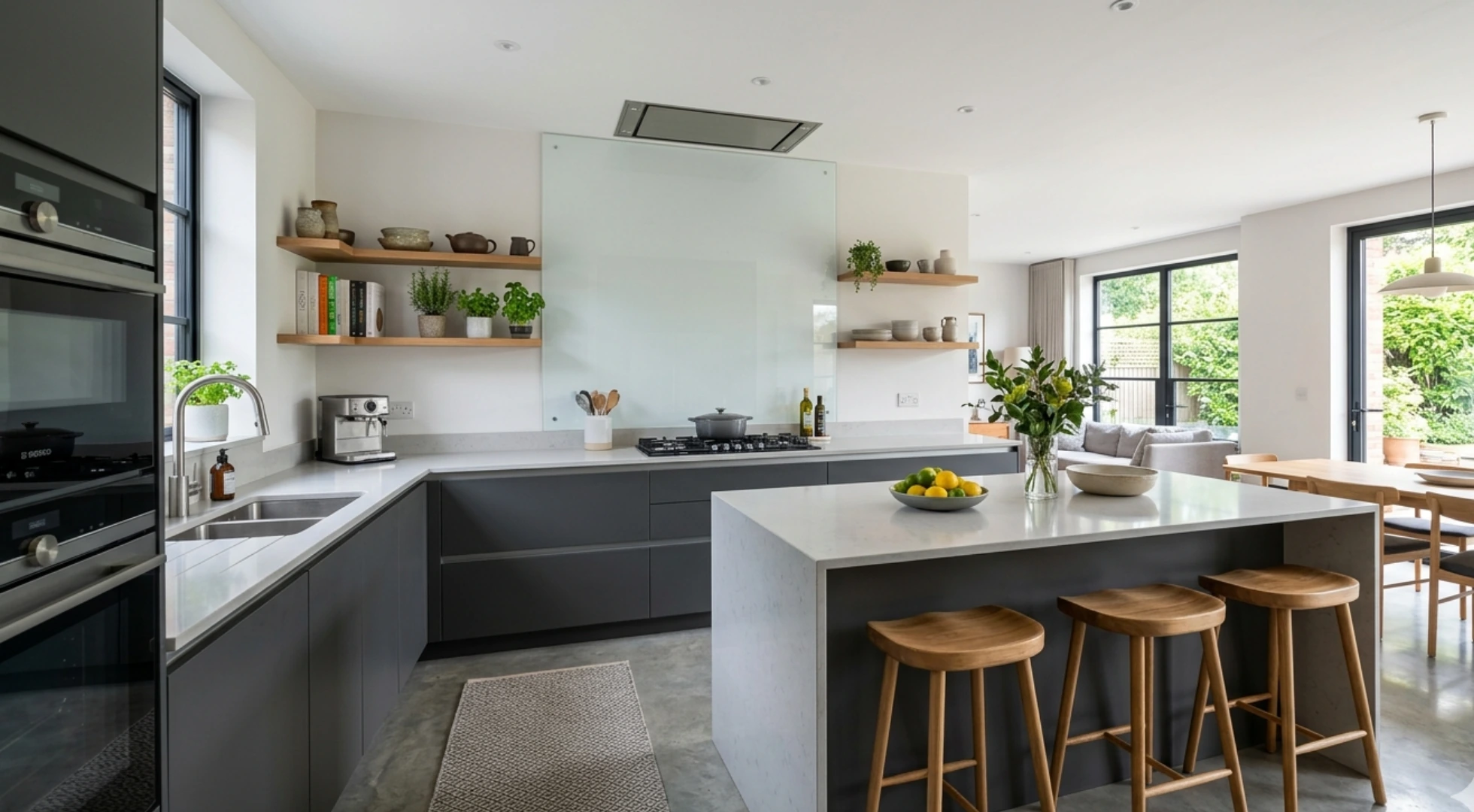
When planning a new kitchen or updating an existing one, a common question quickly arises: Can a glass splashback safely go behind a cooktop? For homeowners considering glass splashbacks in Hobart, this decision extends beyond appearance and into safety, building code compliance and long-term performance in real Australian cooking conditions. Ausflet Glass & Aluminium examines when glass is suitable behind gas, electric, or induction cooktops, what regulations require and how correct installation influences performance.
It also outlines the types of glass appropriate for high-heat areas, required clearances from cooktops and situations where additional protection may be necessary. By understanding these factors, it becomes easier to assess which options support compliance, durability and a seamless finish, as well as where incorrect choices may lead to cracking, heat damage, or compliance risks.
Homeowners usually ask whether a glass splashback can go behind a cooktop because it looks like a simple design choice, but it is actually tied to fire safety rules, building code compliance and warranty conditions. The area directly behind a gas or electric cooktop is one of the highest-risk surfaces in a kitchen, so the wrong decision can lead to heat damage, glass failure or non‑compliant work that may need to be removed.
There is also confusion because many display homes, magazines and online images show glass behind cooktops without explaining that it must be a specific type of safety glass installed in a particular way. As a result, people are unsure what is genuinely safe and legal compared with what is just a styling photo.
The most immediate question is whether glass will crack or shatter from the intense heat produced by a cooktop. Homeowners worry about:
Standard annealed glass is not suitable behind a cooktop because it is not designed for high temperature variation. Toughened safety glass is required because it is heat-resistant and if it fails, it breaks into small, blunt fragments instead of large, dangerous shards. Many people have heard that “glass and heat do not mix” but have not been told that the glass type is what makes the difference.
Another common driver is uncertainty about what the National Construction Code and relevant Australian standards actually allow. Homeowners often hear different answers from trades, designers and retailers and are left unsure who is correct.
Key compliance questions include whether combustible materials behind the glass, such as painted plasterboard or MDF, are acceptable, what distance is required between gas burners and any glass surface and whether the cooktop manufacturer imposes stricter rules than the building code. People want to avoid a situation where an insurer or future buyer questions a non‑compliant installation.
Appliance installation manuals sometimes state that a non‑combustible surface is required behind the cooktop but do not explain if toughened glass over plasterboard meets that requirement. This gap between technical wording and practical interpretation is a major reason the same question keeps coming up.
Homeowners are also weighing up aesthetics, cleaning and budget. Glass splashbacks are attractive and make a kitchen look larger and brighter, which encourages people to continue the surface behind the cooktop for a seamless finish.
At the same time, there is anxiety about how easily glass will stain from cooking splatter, whether the colour or printed design will fade with heat and how scratches or impact damage will be handled. The cost of toughened glass compared with tiles or stainless steel can be significant, so people want to be sure it is a durable and suitable choice in the hottest part of the kitchen before committing.
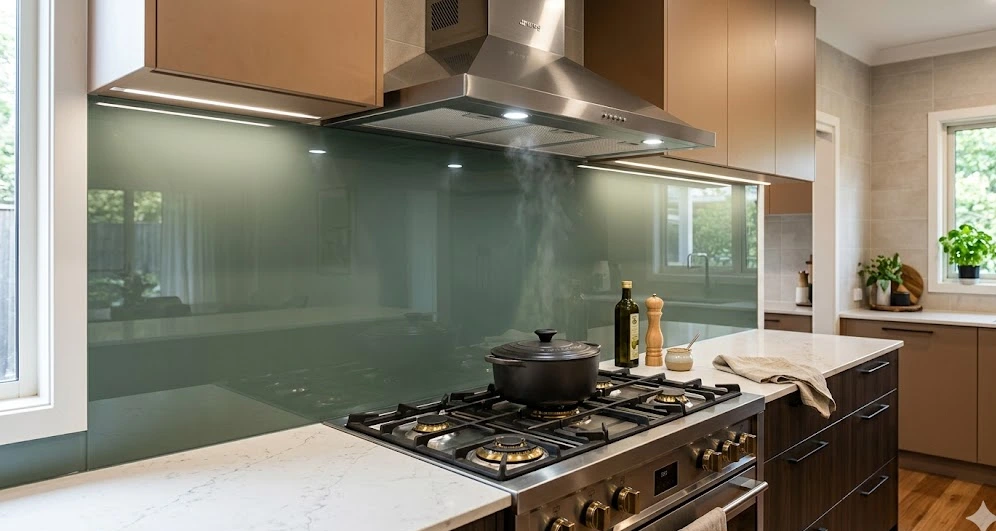
A glass splashback can be installed directly behind a cooktop if it is the correct type of safety glass and sized and positioned to meet standards. In kitchens, glass is one of the most common splashback materials behind gas, electric and induction cooktops because it is hygienic, easy to clean and provides a seamless modern finish. The key is not simply choosing “glass” but ensuring it is toughened to the right specification, installed at appropriate clearances and sealed correctly so it safely withstands heat, moisture and daily use.
Behind any cooktop, the glass must be Grade A toughened safety glass compliant with AS 2208. Ordinary annealed glass or mirrored glass that is not toughened must never be used because it can crack or shatter when exposed to heat.
Most kitchen splashbacks use 6 mm toughened glass. In some situations, such as larger spans behind powerful gas burners, thicker glass may be specified to limit flex and improve impact resistance. Toughening changes the way glass reacts to heat so it can tolerate the rapid temperature changes that occur behind a cooktop.
Toughened glass also breaks into small granular fragments rather than sharp shards if it fails, which reduces injury risk. Once glass has been toughened, it cannot be cut, trimmed or drilled, so all power point cutouts, edges and corners must be accurately measured and manufactured before the toughening process.
The type of cooktop affects how the glass performs and what clearances are needed.
Behind an induction or ceramic electric cooktop, the heat at the wall is relatively low because most heat is transferred into the cookware. Toughened glass can typically be installed quite close to the edge of the cooktop as long as the manufacturer’s instructions and relevant standards are followed.
Gas cooktops produce more radiant and convected heat. Australian Standard AS/NZS 5601.1 sets minimum clearance requirements for combustible surfaces. Toughened glass is treated as a non‑combustible surface, allowing it to be installed closer than materials like laminate or timber. However:
Incorrect clearances can lead to glass overheating, staining of sealants or even failure of coatings on the back‑painted surface.
Behind a cooktop, a glass splashback must be mechanically secure and properly sealed to prevent moisture, grease and food residues from reaching the wall behind.
Silicone adhesive is typically used over a prepared wall surface with the glass pressed into place and supported while the silicone cures. Heat-resistant neutral‑cure silicone is preferred, especially directly behind gas burners. All perimeter joints around benchtops, adjacent walls and rangehoods should be sealed to prevent water and oil ingress.
Exposed edges around the cooktop area should be smooth and polished to reduce the risk of chipping. Where the design allows, edges can be tucked under rangehoods or slightly behind cabinetry for additional protection from knocks and thermal stress.
A glass splashback can safely go behind a cooktop if it is the right type of glass, installed correctly and used with the proper clearances from heat sources. Problems usually arise when ordinary glass is used, when minimum distances from gas burners or electric elements are ignored or when local building requirements are overlooked.
The factors that decide suitability are the glass specification, the type of cooktop, how close the flames or elements are to the glass and whether there is any protection such as a rear upstand or side panels. Each of these affects how hot the glass gets and how resistant it is to thermal stress.
Only toughened safety glass should be installed behind a cooktop. Standard float glass can crack or shatter under sudden temperature changes and is not compliant in a high-heat zone. For most residential kitchens:
Toughening changes the internal structure of the glass so it will handle rapid heating and cooling. If failure does occur, it breaks into small, blunt pieces rather than sharp shards, which is critical in a cooking area.
The distance between the glass and the heat source is just as important as the glass type. For gas cooktops, flames that lick up the sides of pots will concentrate heat on the splashback if the gap is too small. Typical practical guidelines include:
Many cooktop manufacturers specify required clearances to combustible and non-combustible surfaces in their installation manuals. Those distances should be followed for the splashback position even when glass is non-combustible.
Suitability is also influenced by how the glass interacts with surrounding cabinetry and benchtops. Glass itself is non-combustible; however, nearby materials may not be.
Where there are laminate or timber side panels next to a gas cooktop, additional protection, such as metal end panels or larger clearances, may be required. Some designs incorporate a stainless steel rear upstand behind the cooktop with glass installed slightly higher on the wall to reduce direct heat exposure.
Local building regulations and standards for kitchen splashbacks set minimum non-combustible surface requirements around gas burners and electric elements. A glass splashback that meets these standards in type thickness and installation clearances is suitable behind a cooktop. If it does not meet them, the installation is unsuitable even if it appears safe in day-to-day use.
Glass is one of several options suitable for behind a cooktop, alongside tiles, stainless steel, stone and acrylic. Each material performs differently in terms of heat resistance, cleaning, cost and appearance, so the choice usually comes down to how the kitchen is used day to day and the look being created.
Toughened glass is specifically engineered for high temperatures and direct exposure to steam and cooking splatter. When correctly installed at the required distance from gas burners, it meets rules for safety and performance and compares favourably with most alternatives.
Tiles have long been the default splashback choice and still suit many kitchens. Compared with tiles, glass offers a completely flat surface with no grout joints. This eliminates the porous lines that tend to stain or discolour around cooktops and makes grease removal faster. A single wipe with a glass-safe cleaner will usually restore a smooth glass panel. Tiles often need scrubbing with a brush and grout cleaner to remove baked-on residue.
Heat resistance of tiles and toughened glass is broadly comparable for typical cooktop use. Both cope well with radiant heat and steam when correctly installed on a suitable substrate. The key difference is impact behaviour. Tiles that chip can expose sharp edges or crack lines through grout, while toughened glass either remains intact or if severely damaged, breaks into small granular pieces rather than sharp shards.
Visually, glass gives a seamless reflective surface that can be painted in any colour on the rear. Tiles introduce pattern, joint lines and variations in finish. In smaller or darker kitchens, a glass splashback can help bounce light around the cooktop zone, where tiles may absorb more light, depending on the glaze.
Stainless steel is frequently used in commercial-style kitchens for its high heat tolerance. It easily handles heavy use behind gas cooktops. However, it is prone to visible fingerprints and streaks and can show scratches and dents over time. Glass provides a more polished appearance with a wide colour range and resists staining. Both materials are non-porous and hygienic, although glass generally requires fewer specialised cleaning products.
Engineered stone and natural stone slabs create a solid luxury look when carried from benchtop to splashback. Behind a cooktop, engineered stone typically has temperature limits and may require greater clearance from gas burners than toughened glass. Some manufacturers restrict their use directly behind high-output gas hobs. Natural stone withstands heat but is often more porous and may etch or stain with acidic splashes. Glass is non-porous, so cooking oils and sauces will not penetrate even after years of use.
Acrylic and other plastic panels are sometimes used as budget-friendly splashbacks, but they are not suitable for directly behind a cooktop unless a compliant heat-resistant barrier is installed. These materials can warp or discolour when exposed to high temperatures. Toughened glass is specifically designed to tolerate the heat from gas and electric cooktops within the distances set out in Australian standards.
From a maintenance perspective, both acrylic and glass provide smooth surfaces without grout, yet acrylic scratches more easily and is less resistant to some cleaning chemicals. In a high-use cooking zone, glass offers a longer-lasting finish and a safer choice immediately behind burners.
A glass splashback can be installed behind a cooktop when it is selected and installed in accordance with Australian safety standards and accepted trade practices. Considerations include the use of toughened safety glass, adherence to minimum clearance requirements around gas and electric burners and compliance with relevant standards such as AS 1288 and NCC provisions. Design choices must also be assessed alongside practical factors. A kitchen splashback functions not only as a visual feature but also as a safety-critical building element. When correctly specified and professionally installed, glass provides a durable, hygienic and visually seamless solution behind cooktops while maintaining compliance and protecting surrounding materials.
Get in touch with our team of glass experts now at Ausflet Glass & Aluminium. Discover the difference that working with the professionals can make!
Call Us Now!